Making a first-of-its-kind factory something buyers could navigate, quote, and order from.
2007 to 2015Internet Marketing Manager, then Director of Digital Interactive
Solid Concepts made prototypes and production parts with 3D printing and other technologies, for business and consumer buyers. I directed the experience, creative, and development of its digital presence across three outside agencies and four departments, through the merger that became Stratasys Direct. I led a team of 12 and a $2 million advertising budget. Qualified leads rose 450 percent, and Net Promoter Score tripled.
Our buyers were mostly engineers at NASA, Lockheed Martin, Northrop Grumman, Boeing, General Dynamics, Bell, GE, and a long list of other defense and commercial manufacturers, plus plenty of tinkerers. They knew exactly what they needed and hated waiting for a call back. I launched ZoomRP, a self-service quoting portal for short-run prototypes, and relaunched Solid Concepts' interactive quoting portal for everything from 3D printing to injection molding. I was also the videographer, the SEO guy, and the software UI designer, among other hats.
By 2013, 9,500 accounts were quoting through the portal, and the site supported more than $12 million in revenue that year. Ninety-five percent of marketing activity could be traced to a result.
The lesson I kept: a system should explain itself.
The mergerThree companies, one front door
Moving three companies' customers without losing them
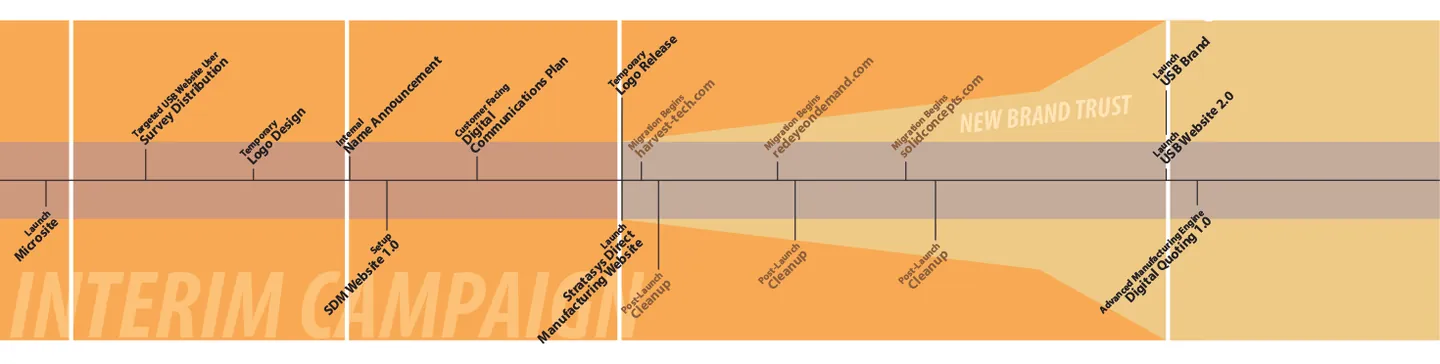
When Solid Concepts, Harvest Technologies, and RedEye came together as Stratasys Direct Manufacturing, each had its own website, customers, and habits. I planned the digital side of the transition in stages: an interim campaign and name announcement, a temporary identity, then one site at a time migrated into the new one, each followed by cleanup, before the permanent brand and a digital quoting engine launched.
Merger rollout timeline. Select to view full size.
The namesOne product, many names
Keeping every name a product has ever had
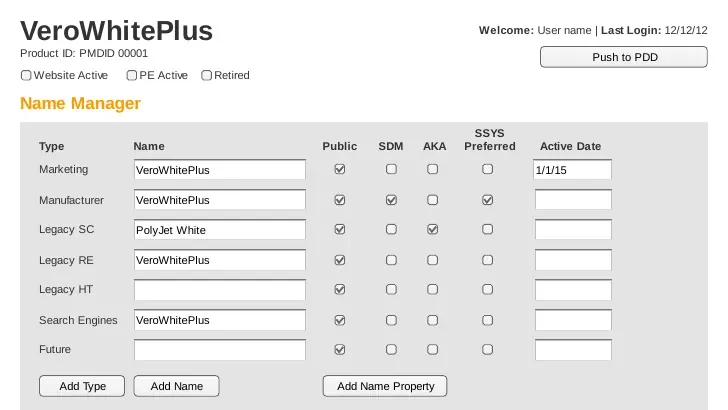
After the merger, one material could carry a marketing name, a manufacturer's name, and a different name at each legacy company. Customers still searched the names they knew. I designed an admin tool that keeps every name for a product in one record, marks which are public, and records which is preferred, so an old name still leads to the right material.
It's the same problem, at a smaller scale, as a family name that changed generations ago. The records study picks it up from there.
The name manager, from the product data administration design.
The systemEvery capability, one map
Mapping the platform before designing a page
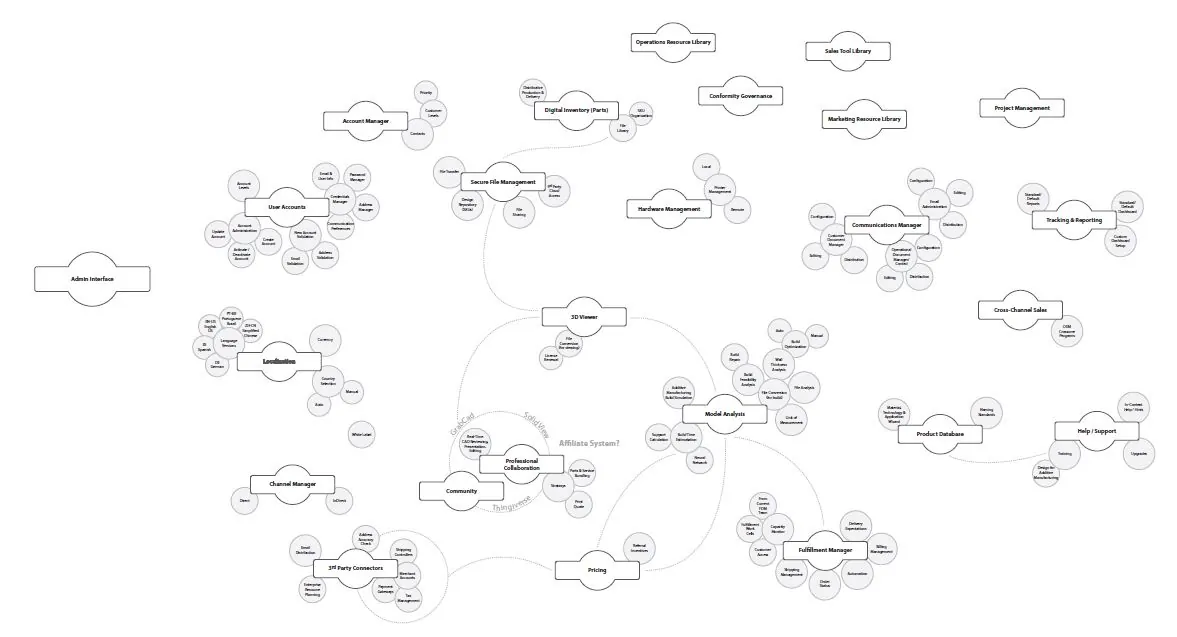
Before any screens, I mapped every capability the platform would need and how they connect: accounts, secure file management, a 3D viewer, model analysis, pricing, fulfillment, localization, support, and the third-party systems behind them. A buyer's path runs through many of these, so the map came first.
Modular system map. Select to view full size.
The quoteRapidQuote, 2012
A quote in three steps instead of a phone call
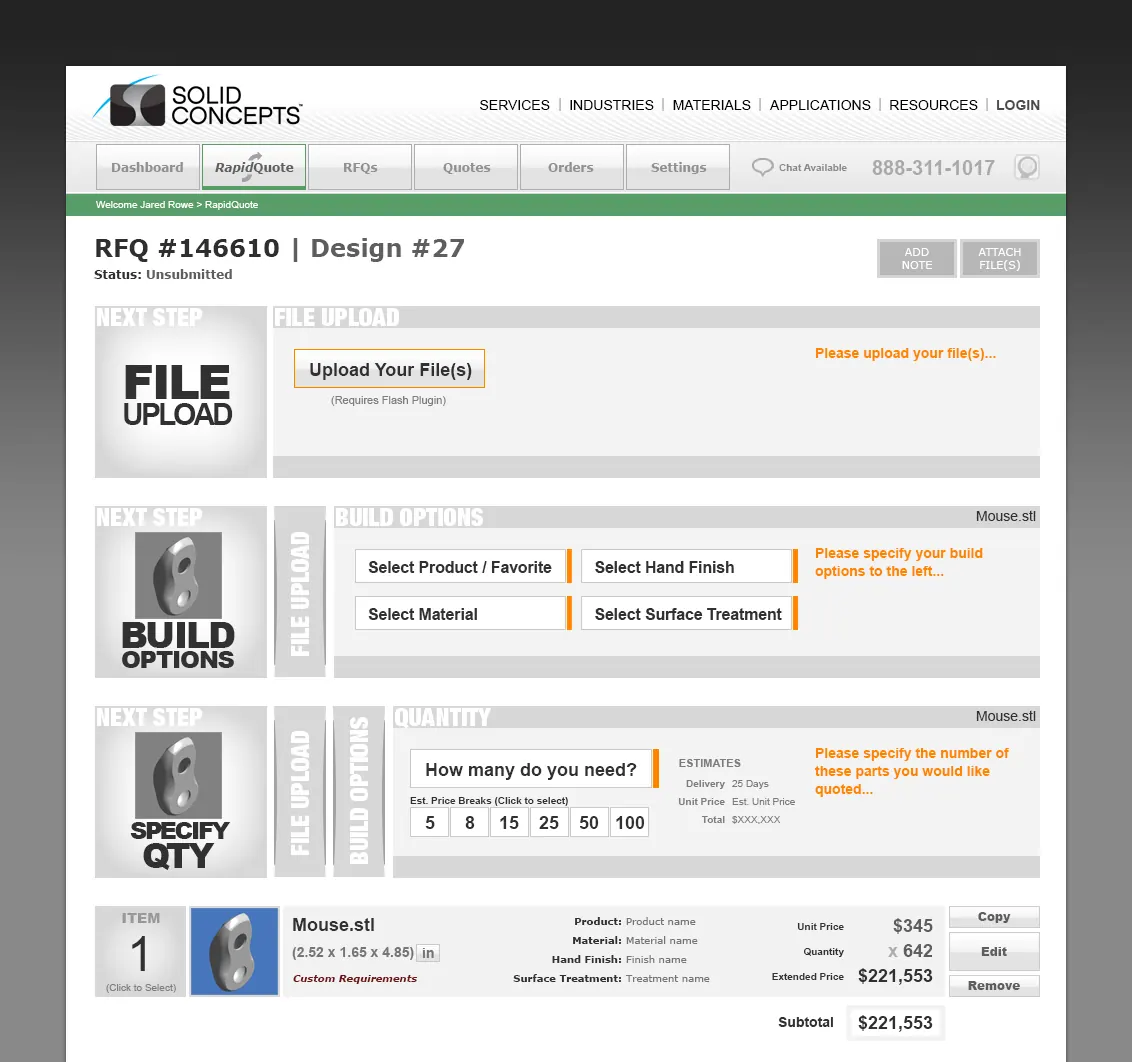
Getting a price used to mean talking to a salesperson. RapidQuote broke it into three steps: upload a file, choose build options, and set a quantity with price breaks. Each step opens only when the one before it is done, and the running line-item total shows the cost as choices are made. It became part of a website and quoting portal I directed, a $4.5 million project.
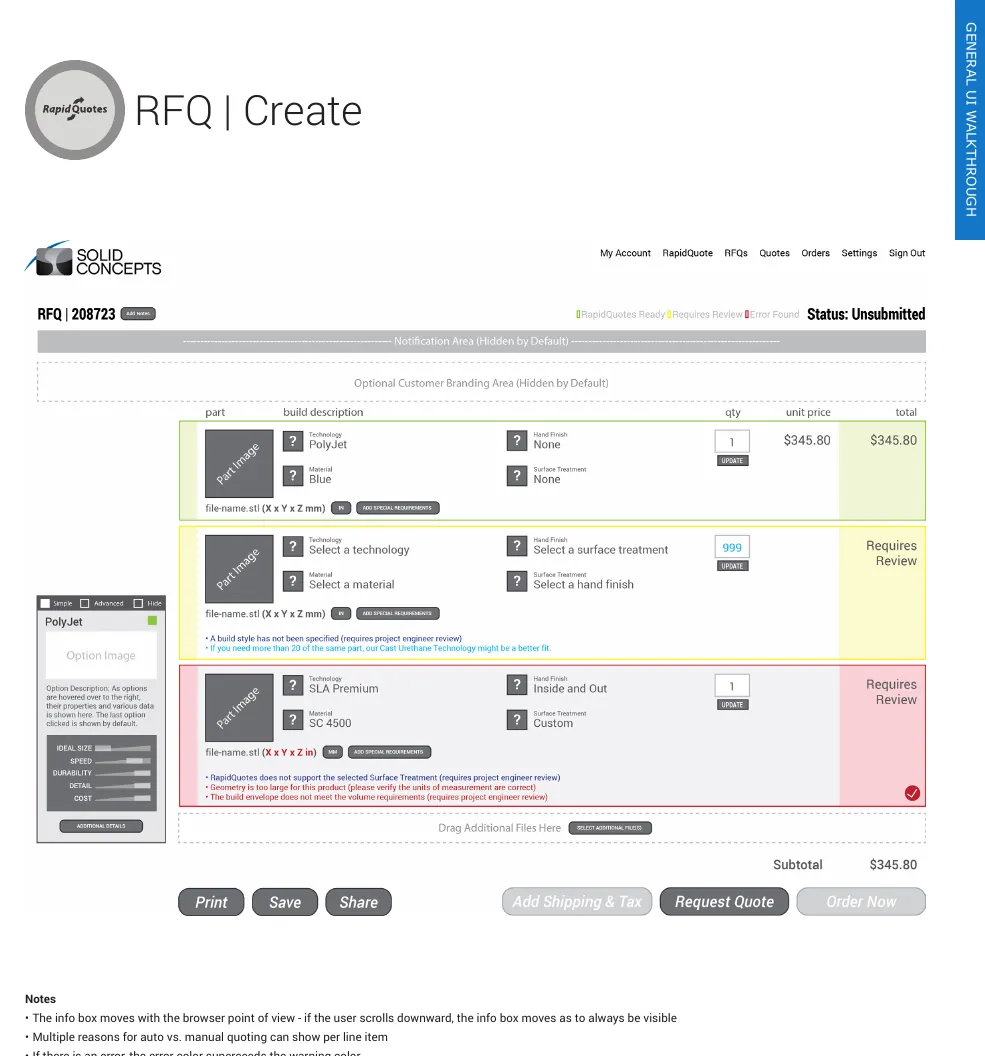
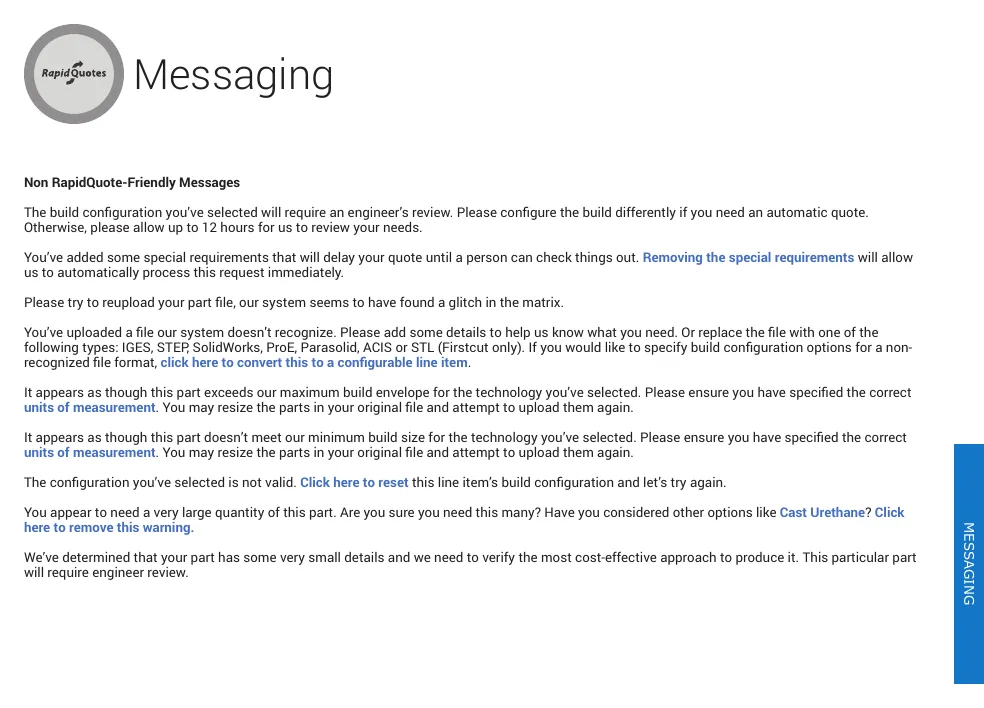
The harder design problem was the parts that couldn't be priced automatically. Each line item showed a clear status: ready, needs an engineer's review, or has an error. Every message said why and what to do next, whether that was a wrong unit of measurement, a part too large for the chosen technology, or a quantity large enough that a different process would cost less.
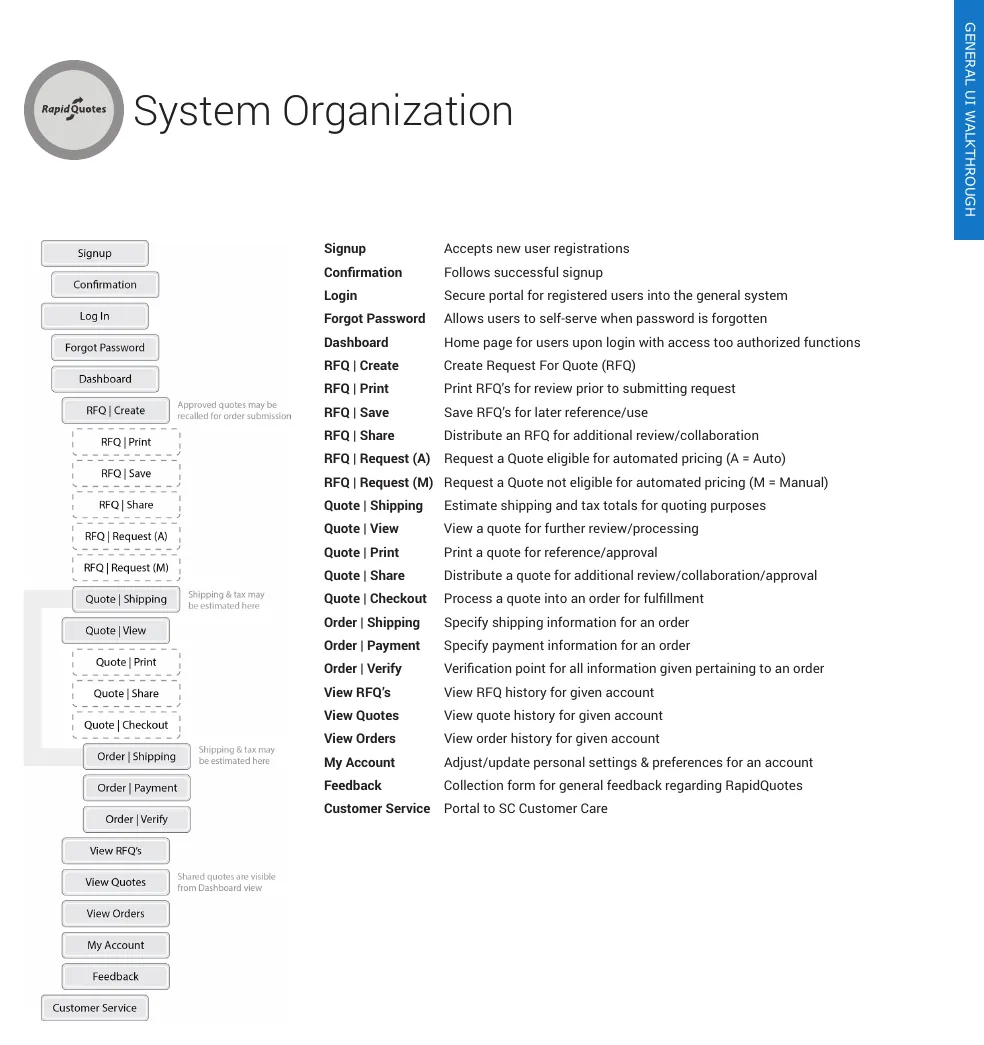
I documented the whole system in a 31-page specification: every screen, what it was for, how it behaved, and the exact wording of each message.
Every screen, and what it is for. Select to enlarge.
Three states, each with its reasons. Select to enlarge.
The messages, written to say why and what to do next. Select to enlarge.
The RapidQuote flow.
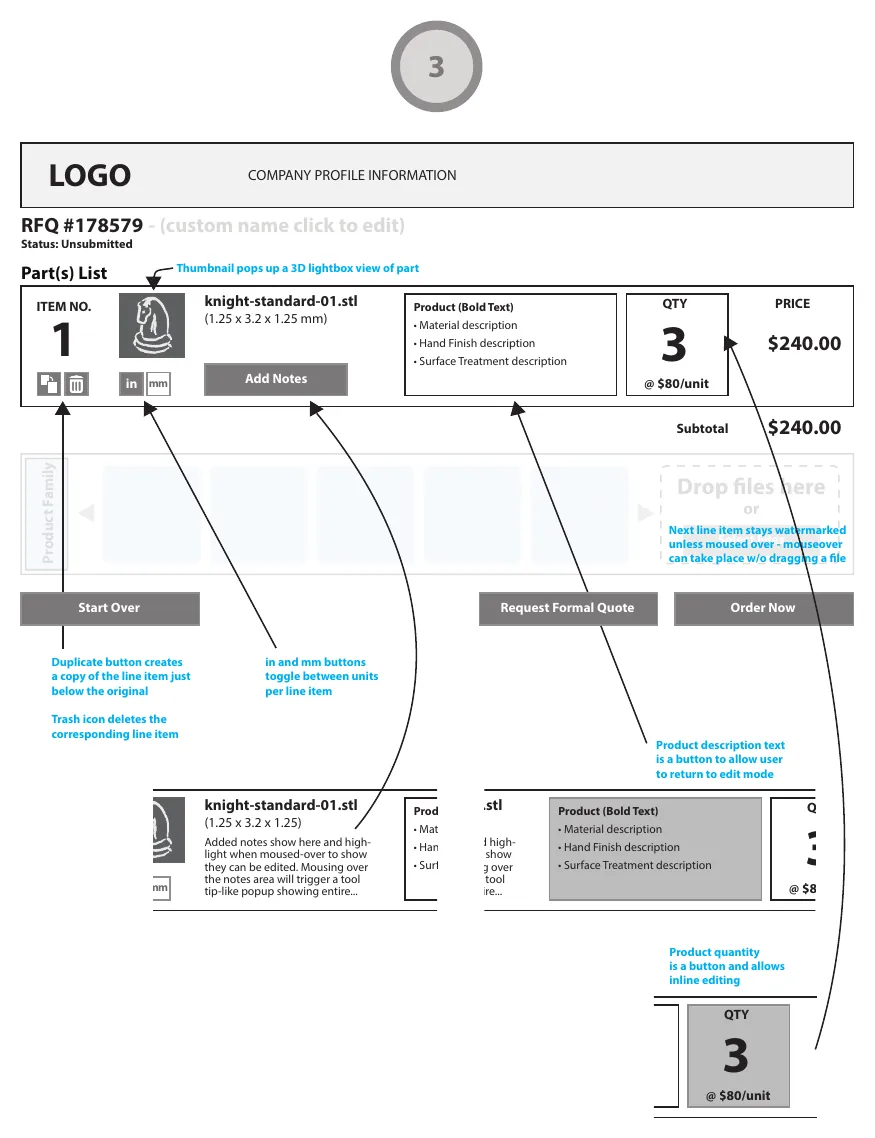
A later iteration: every part of a line item editable in place.
The front doorFour directions
Four ways into the same factory
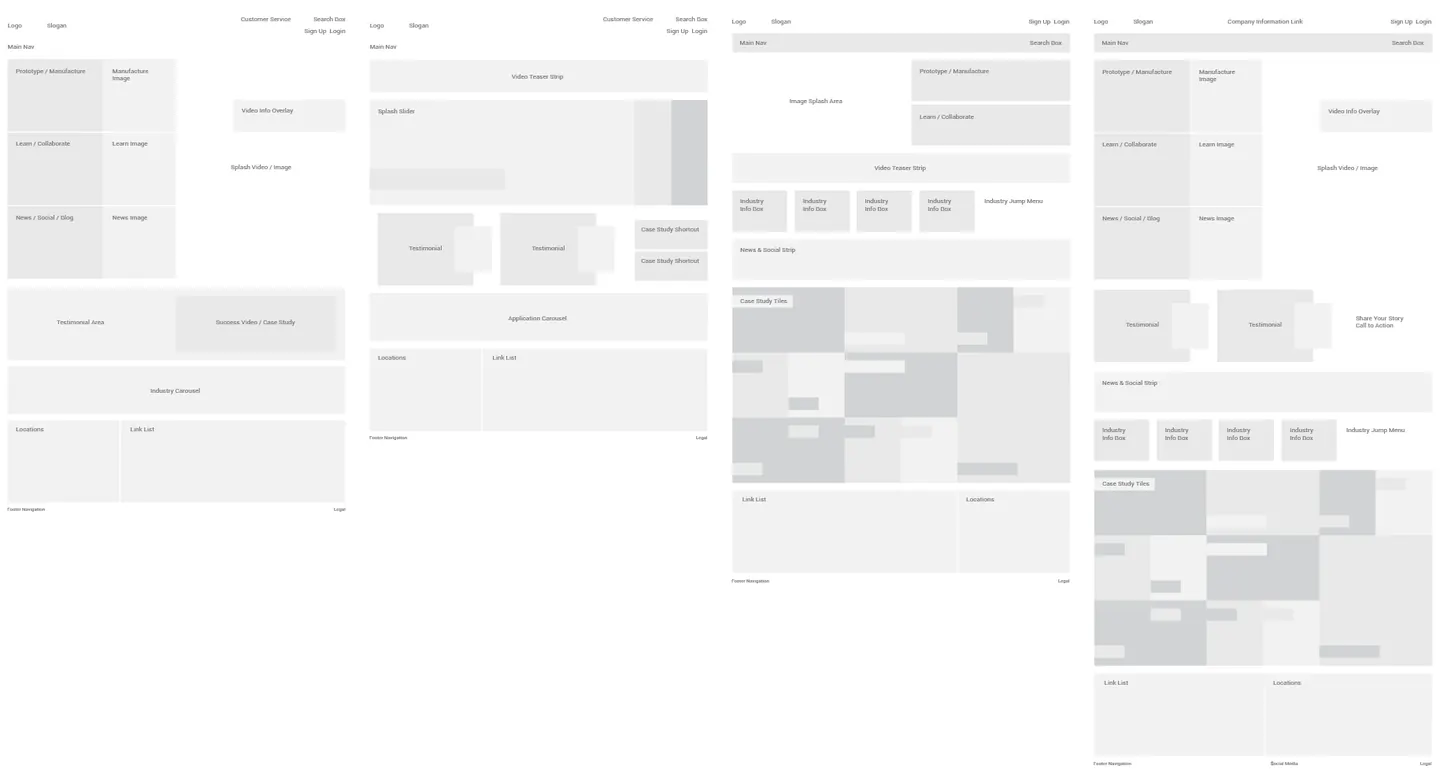
For the Stratasys Direct home page, I explored four layouts, each weighing the same parts differently: the two core paths (prototype and manufacture, or learn and collaborate), proof through testimonials and case studies, and a way in by industry.
Home page wireframe directions. Select to view full size.
The measureROI dashboard, 2015
Every dollar, traced to a result
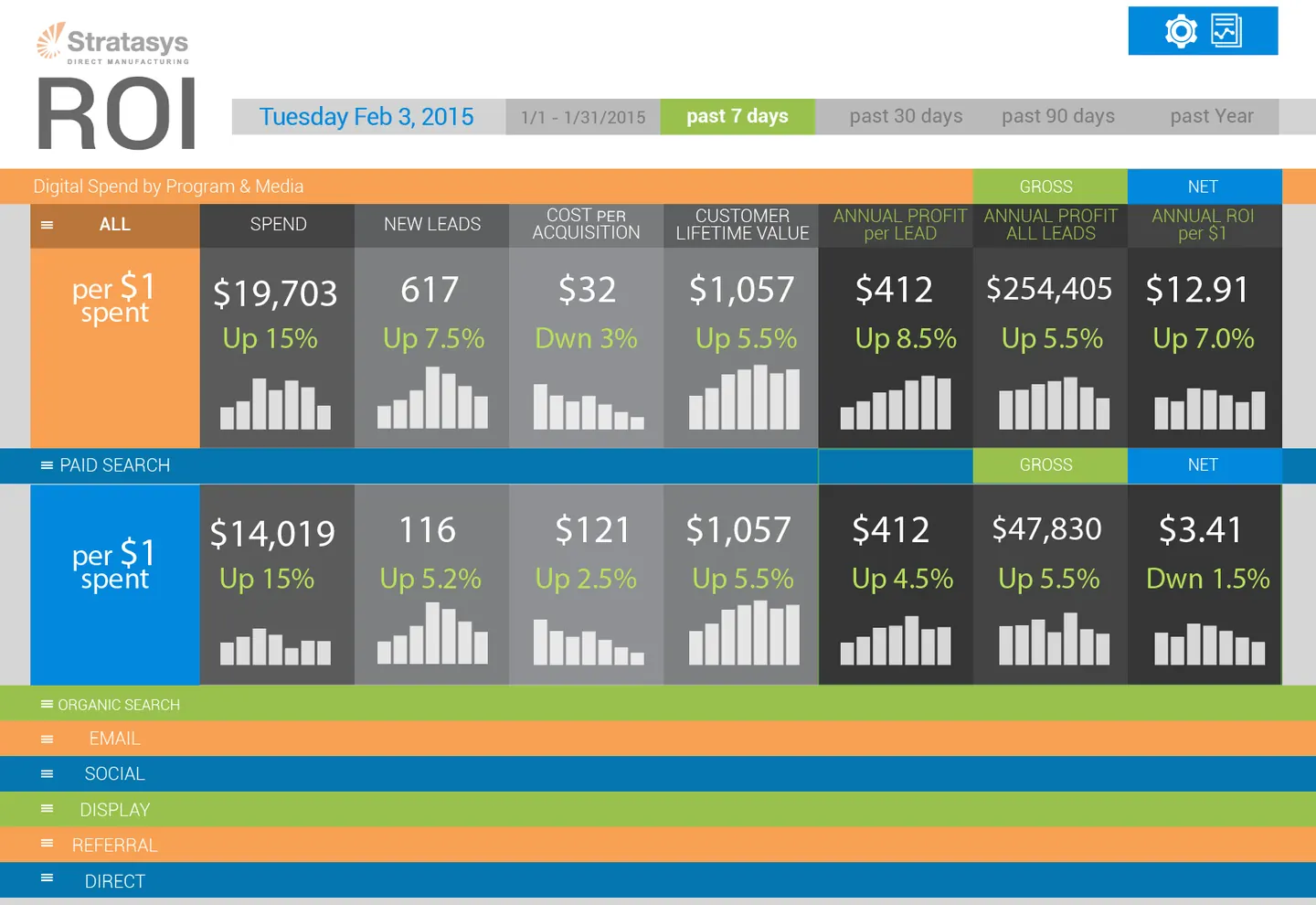
I led attribution modeling and automated, real-time KPI dashboards for all digital channels. This design put spend, new leads, cost per acquisition, customer lifetime value, and return per dollar on one screen, by channel, over any time range.
ROI dashboard design, 2015.
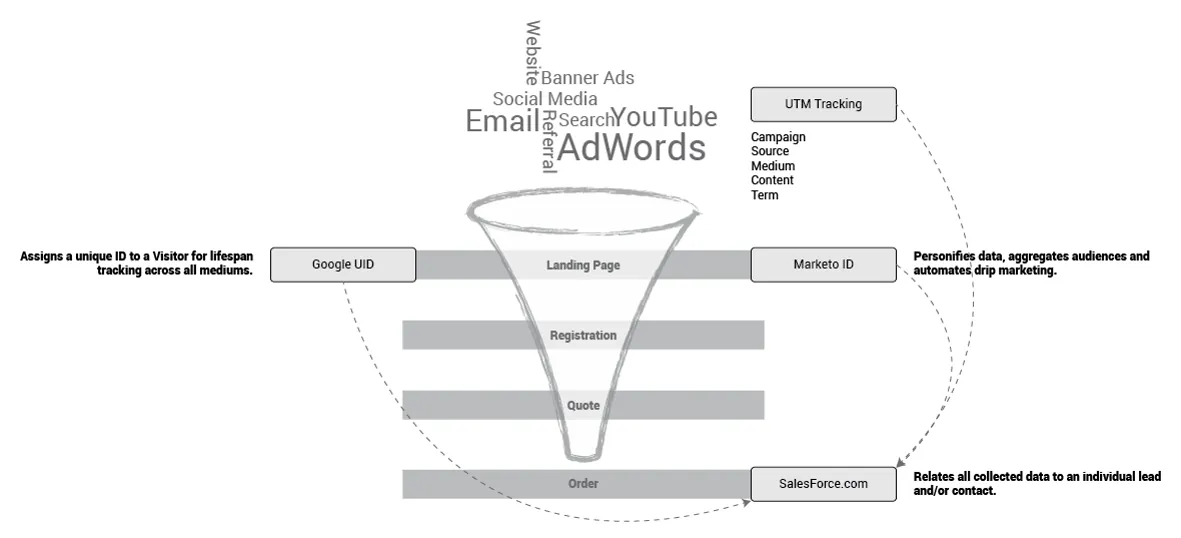
Behind it sat an attribution map that followed each visitor from the first click through registration, quote, and order, connecting analytics, marketing automation, and the sales system.
Attribution map.
These samples come from projects completed between 2006 and 2016. Any confidentiality markings on them were added by me while drafting; nothing shown here is confidential.